Guide
Navigating the New Era of Site Feasibility: Strategies for 2026 and Beyond
Master clinical trial site feasibility 2026 with data-driven strategies. Learn how AI, real-world data, and regulatory shifts impact site selection.
Clinical Trial OS · · 6 min read
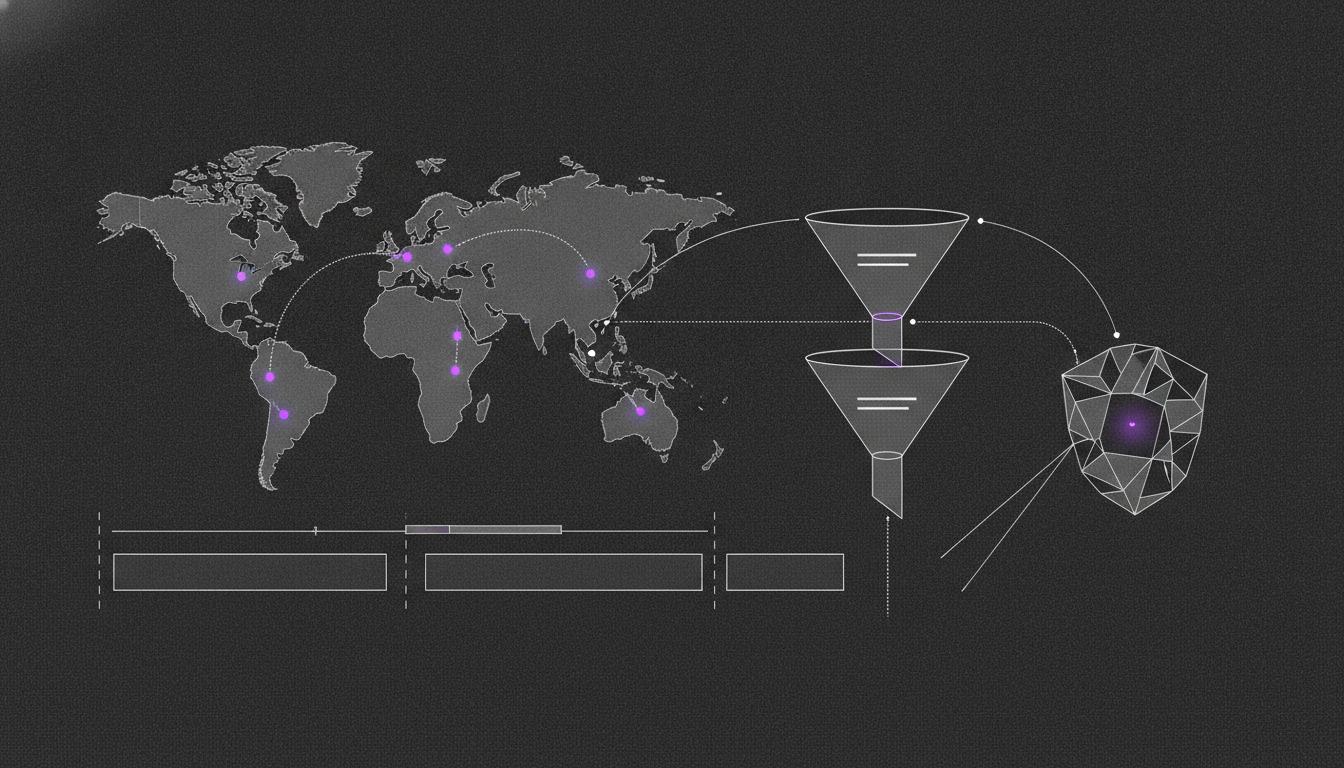
The new era of site feasibility demands predictive modeling over static surveys. We must prioritize data-rich protocols and minimize site burden to secure enrollment targets. The AI-powered clinical trial site feasibility market is projected to reach $4.38 Bn, reflecting the urgent shift toward smarter tools AI-Powered Clinical Trial Site Feasibility Research Report 2026.
Key takeaways
- Shift from retrospective surveys to predictive analytics using real-world data.
- Reduce site burden by streamlining questionnaires and communication loops.
- Align protocols with regulatory updates like ICH E6(R3) before launch.
- Use structured metrics to evaluate site performance objectively.
Why Is Traditional Site Feasibility Failing in 2026?
Traditional methods rely on historical self-reporting that ignores current site capacity and patient access realities. In 2026, static questionnaires fail to capture dynamic variables like staff turnover or competing studies. This leads to under-enrolled sites and prolonged timelines.
The core issue is data latency. Sponsors often receive feasibility answers weeks after submission, by which time site circumstances may have changed. Manual data entry introduces errors that compound during bid defense. We need real-time access to site operational data rather than relying on outdated spreadsheets.
Modern approaches integrate electronic health records and historical recruitment rates directly into the assessment pipeline. This reduces the manual workload for clinical operations teams and provides a clearer picture of recruitment potential. Without this shift, sponsors continue to face the inefficiency and unreliability plaguing current processes.
What Are the Pitfalls of Early Feasibility vs Finalized Protocols?
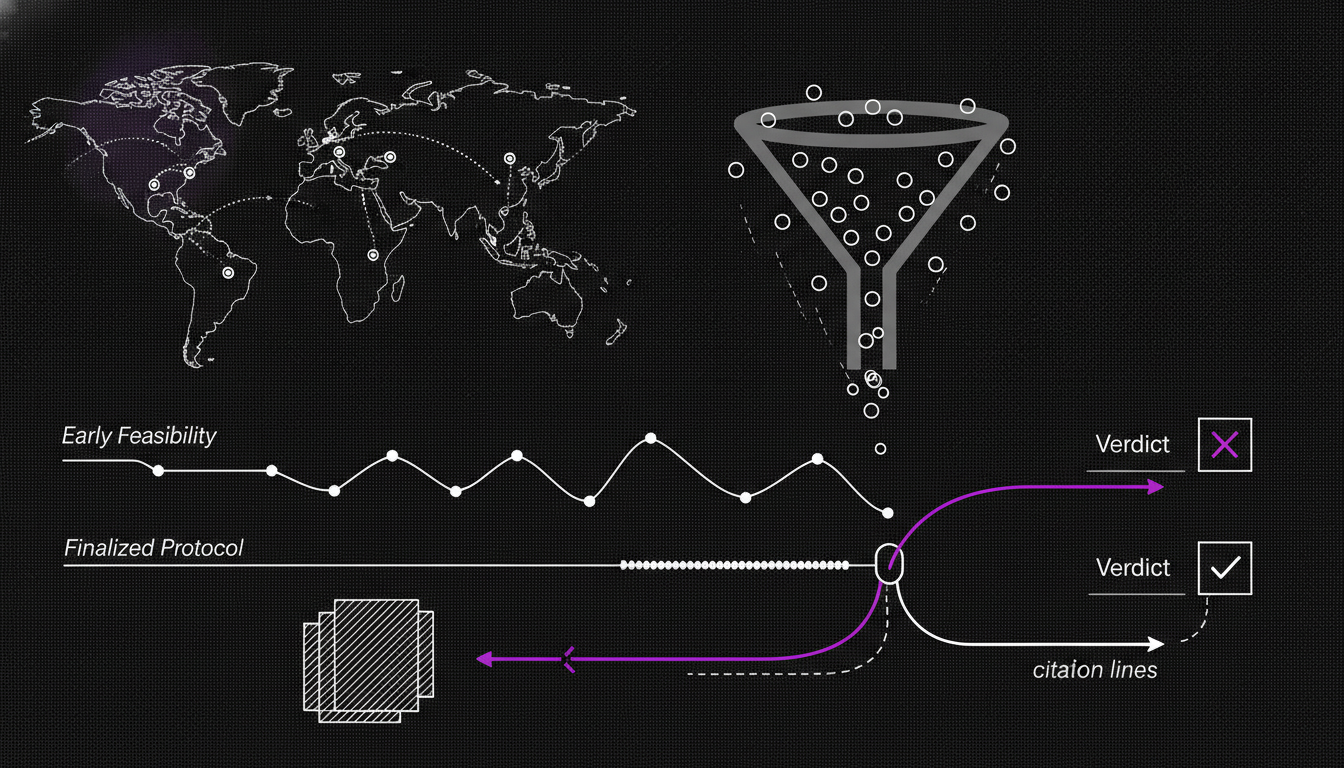
Early feasibility assessments often occur before protocols are finalized, creating a high risk of mismatched expectations. Sites provide estimates based on incomplete inclusion criteria or visit schedules. When the protocol changes, those estimates become invalid, leading to renegotiation and delay.
Sponsors frequently use early assessments to triage portfolios quickly. However, this speeds up decision-making at the cost of accuracy. A site might agree to a timeline that becomes impossible once eligibility criteria tighten. This misalignment wastes resources for both the sponsor and the investigative site.
To mitigate this, we recommend running parallel feasibility tracks. One track assesses general capacity using broad criteria, while the other waits for key protocol amendments. This dual approach balances speed with precision. It prevents the common scenario where a site signs on only to withdraw later due to unforeseen protocol complexity.
How Do We Reduce Site Burden During Questionnaires?
Streamlining questionnaires is essential to maintaining site engagement and data quality. Long, repetitive forms frustrate site staff and lead to incomplete responses. In 2026, automation should handle data extraction rather than forcing manual entry.
Sponsors should audit their feasibility questionnaires for redundancy. Questions about facility licensing or staff credentials should pull from existing databases where possible. Communication must be consolidated; multiple follow-up emails for the same study break trust. A single, secure portal for updates reduces noise.
We observed that sites respond faster when the process respects their time. Pre-filling known data fields allows site staff to focus on specific capability gaps. This approach not only speeds up the response but also improves the accuracy of the information provided.
Can AI and Real-World Data Improve Predictive Site Selection?
AI and real-world data transform site selection from a static guess into a predictive model. By analyzing historical recruitment rates and patient demographics, algorithms can forecast enrollment probabilities more accurately than human intuition. This technology is gaining traction as the market expands.
The AI-powered clinical trial site feasibility market report highlights significant growth, indicating industry validation of these methods AI-Powered Clinical Trial Site Feasibility Market Report 2026. These tools aggregate data from multiple sources to identify sites with high potential for specific therapeutic areas.
However, AI is not a magic bullet. It requires clean, standardized data to function correctly. Garbage in, garbage out remains a critical risk. We must validate AI recommendations against local clinical knowledge. The best strategy combines algorithmic insights with expert review to ensure feasibility models reflect ground truth.
| Feature | Traditional Feasibility | AI-Driven Feasibility |
|---|---|---|
| Data Source | Self-reported surveys | Historical RWD + EHR |
| Speed | Weeks | Hours to Days |
| Accuracy | Variable (Human Error) | High (Pattern Recognition) |
| Cost | High Manual Labor | Scalable Licensing |
| Updates | Static | Dynamic/Real-time |
How Do Regulatory Changes Like ICH E6(R3) Influence Site Selection?
Regulatory updates like ICH E6(R3) emphasize quality by design and risk-based monitoring. This shifts feasibility focus toward site quality systems rather than just recruitment numbers. Sites must demonstrate robust compliance infrastructure before selection.
These changes require sponsors to evaluate site governance during the feasibility phase. A site with high recruitment potential but weak quality controls now poses an unacceptable risk. This necessitates deeper due diligence into SOPs and staff training records.
Adapting to these reforms means updating feasibility checklists. Questions must now probe into data integrity processes and risk management capabilities. Ignoring these factors can lead to audit findings or protocol deviations later. We must align selection criteria with the evolving regulatory landscape to ensure study integrity.
What Metrics Matter Most for Robust Site Feasibility Assessment?
Robust assessment relies on specific, measurable data points rather than general impressions. Key metrics include historical enrollment rates, screen failure rates, and staff turnover. These numbers provide objective evidence of site capability.
We prioritize metrics that predict future performance. For example, a site's average time from screening to randomization is more valuable than total past enrollment. High screen failure rates indicate eligibility criteria mismatches that will persist in new trials.
| Metric | Why It Matters | Target Threshold |
|---|---|---|
| Time to First Patient In | Indicates operational readiness | < 60 Days |
| Screen Failure Rate | Reflects criteria alignment | < 30% |
| Staff Turnover | Predicts continuity risk | < 15% annually |
| Protocol Deviation Rate | Shows quality culture | < 5% |
Tracking these metrics consistently allows for portfolio triage. Sponsors can identify which sites are likely to perform and which require additional support. This data-driven approach reduces the guesswork in go/no-go decisions.
How Do We Build a Future-Proof Site Selection Strategy?
Building a future-proof strategy requires integrating these tools and metrics into a unified workflow. It means treating feasibility as a continuous process rather than a one-time event. Teams must remain agile as protocols and regulations evolve.
Collaboration is central to this strategy. Sponsors, CROs, and sites must share data transparently. Silos create friction that slows down execution. By adopting shared platforms, we can align expectations and reduce administrative overhead.
To start, audit your current feasibility process against these standards. Identify gaps where manual work or outdated data persists. Then, invest in systems that automate data collection and analysis. This systematic upgrade ensures your team remains competitive in the 2026 landscape.
FAQ
What are the biggest site selection challenges in clinical trials today?
The primary challenges include outdated data sources, high site burden, and protocol misalignment. These factors lead to slow enrollment and increased operational costs for sponsors.
How can we improve site feasibility assessments effectively?
Improvement comes from integrating real-world data and AI tools. Streamlining questionnaires and focusing on objective metrics also enhance accuracy and speed.
Is early site feasibility reliable compared to finalized protocol assessments?
Early assessments are faster but less reliable due to potential protocol changes. Finalized protocol assessments offer higher accuracy but take more time to execute.
What is the impact of regulatory changes on site selection?
Regulations like ICH E6(R3) prioritize quality systems over just recruitment numbers. This requires deeper due diligence into site governance and compliance capabilities.
How does real-world data help with site feasibility?
Real-world data provides historical insights into patient populations and recruitment rates. This allows for predictive modeling rather than relying on self-reported surveys.
For more on optimizing your feasibility workflow, visit Clinical Trial OS.
See a verdict you can actually check.
Send us a protocol — or just a molecule and an indication. We'll return a fully cited feasibility assessment you can trace, line by line, back to public data — yours to defend in a bid, take to your board or investment committee, or hand to a regulator.