Guide
The Evolving Role of AI in Clinical Trial Site Selection: A 2026 Perspective
AI clinical trial site selection in 2026: how machine learning, real-world data, and look-alike models are changing feasibility and which limitations still require human judgment.
Clinical Trial OS · · Updated · 8 min read

AI is already reshaping clinical trial site selection, but it is not making the go/no-go decision for you. In 2026, sponsors use machine learning to match protocols against real-world patient volumes and care-delivery signals before contacting a single site. The shift matters because site selection is the variable that decides whether a trial meets enrollment goals or slips into costly delay, and the models are only as good as the data you feed them.
Key takeaways
- AI shortlists sites faster than manual feasibility, but a human must verify capacity and willingness to enroll.
- Real-world data, claims, EMR volumes, and historical site performance matter more than the algorithm itself.
- Look-alike modeling can surface sites traditional databases miss, especially for rare or under-represented populations.
- Do not use AI for site selection on a first-in-human trial with no enrollment history to benchmark against.
- Treat AI output as a hypothesis, not a contract.
How is AI currently reshaping clinical trial site selection?
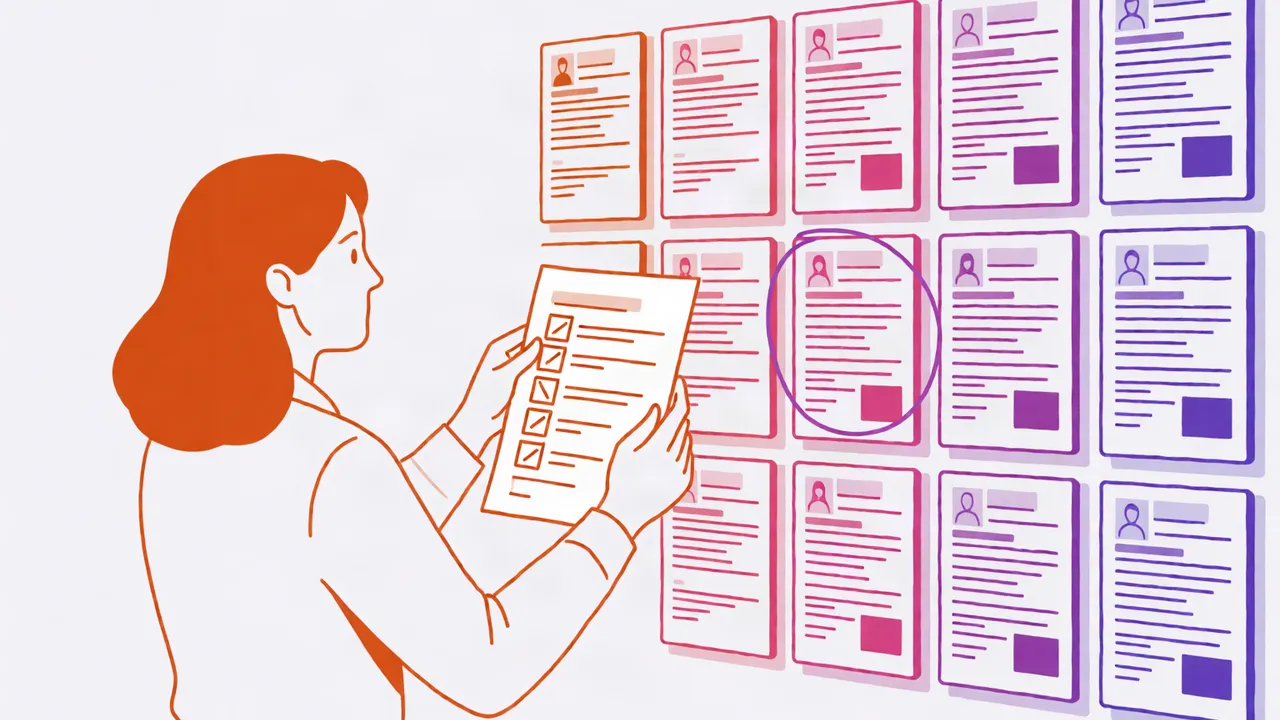
AI is moving site selection from a relationship-driven exercise to a protocol-first matching process. Rather than starting with the sites a CRO or sponsor already knows, teams now feed eligibility criteria into models that compare them against real-world patient volumes, referral patterns, and historical enrollment. The result is a ranked shortlist instead of a Rolodex.
That is the practical change I have seen in the last twelve months. Where feasibility used to mean calling ten sites and hoping two could enroll, it now means running a protocol through a model and calling the five sites the data says are most likely to deliver. Eliassen Group’s October 2026 breakdown of site-selection risk describes this pressure directly: clinical teams are under pressure to accelerate timelines and reduce operational risk, and selecting the right sites determines whether a study meets enrollment goals or struggles with costly delays.
The risk is over-trusting the rank order. A model can tell you a site has the patients; it cannot tell you if the principal investigator is leaving, the coordinator is overbooked, or the site has three other studies running in the same indication.
AI in feasibility assessment clinical trials
Feasibility is where AI is most useful right now. By comparing protocol criteria—age ranges, comorbidities, prior treatments—against de-identified patient data, a model can estimate how many eligible patients a site sees per month. That estimate is a starting point, not a promise. I treat it as a hypothesis to test in a site qualification call, not as a reason to skip the call entirely.
What are the key AI-powered tools and platforms for site feasibility and identification?
The tools I have actually used sort into three buckets. Feasibility engines score sites against protocol criteria. Look-alike models find sites that resemble high-enrolling performers from past studies. Activation trackers predict how quickly a site can move from contract to first patient.
| Tool category | What it does | Best used for | Where it falls short |
|---|---|---|---|
| Feasibility engine | Scores sites against protocol eligibility and patient volume | Building an initial site longlist | Cannot verify site staffing or budget |
| Look-alike model | Matches new protocol to historical high performers | Finding sites for rare-disease or niche indications | Needs clean historical data to work |
| Activation tracker | Predicts startup speed and milestone risk | Prioritizing sites for contract negotiation | Does not capture site culture or PI engagement |
HIT Consultant’s October 5, 2026 report on look-alike modeling and real-world data describes how look-alike modeling across real-world data and care-delivery signals can identify sites that standard databases overlook. That is the category I would bet on for difficult recruitment, but only after the feasibility engine has done the first pass.
How can AI improve patient population access and diversity in clinical trials?

AI can improve access and diversity by matching protocols to actual patient panels rather than to sites that claim they can recruit. When you layer demographic and claims data over site performance, you can find sites serving under-represented populations before enrollment begins, instead of discovering a diversity gap at month six.
AI tools for patient population access
The specific tools here are patient-mapping platforms that overlay trial eligibility with census and claims data. They answer a different question than traditional feasibility: not “Can this site enroll?” but “Does this site’s community have the patients we need, and are they currently reaching them?”
The honest caveat is that data does not fix access. If a site lacks bilingual staff, community trust, or transportation support, no algorithm will enroll the patient. AI identifies the opportunity; operations still has to deliver it.
What data sources are most critical for AI-driven site selection in 2026?
The model is only as good as the inputs. In 2026, the critical inputs are de-identified claims, EMR-derived patient volumes, site-level historical enrollment, and referral-network maps. Public trial registries add competitive context, but they rarely predict enrollment velocity on their own.
| Data source | What it predicts | Limitation |
|---|---|---|
| Claims / EMR | Eligible patient volume at a site | Lag time; coding inconsistencies |
| Historical enrollment | Likelihood of repeat performance | Past performance does not guarantee future capacity |
| Referral networks | Where patients actually go for care | Hard to obtain at scale |
| Trial registries | Competitive site landscape | No enrollment velocity data |
If you are sourcing real-world data for feasibility, I have written about how to source and apply real-world data for feasibility, which covers the hygiene checks these models need.
What are the challenges and limitations of using AI in site selection?
The biggest limitation is that AI predicts enrollment, not execution. A site can look perfect on paper and still fail because the principal investigator is distracted, the IRB is slow, or the site is already at capacity with another sponsor.
Data quality is the second problem. Claims data lags. EMR schemas differ between health systems. A model trained on one region’s data will misfire in another. I have seen teams build a beautiful shortlist only to discover the top site had not enrolled a patient in eighteen months because its database was outdated.
Finally, there is the temptation to let the model make the go/no-go call. It should not. AI ranks; humans decide.
Challenges of AI in site selection
- Data latency and inconsistency across sources
- Over-reliance on historical enrollment as a proxy for future performance
- Inability to assess site culture, PI engagement, or staff turnover
- Regulatory and privacy boundaries around patient-level data
Best practices for integrating AI into your site selection workflow
My rule of thumb: use AI to generate a shortlist, never a final list. Run the model, then have a feasibility lead call the top five sites to verify staff, budget, and patient flow before contracting. The model ranks; the human verifies.
Checklist for AI-assisted site selection:
- Define eligibility criteria precisely before running the model.
- Score sites using at least two independent data sources.
- Manually verify the top five sites with phone qualification.
- Contract only after confirming site capacity and IRB readiness.
- Track actual enrollment against the AI prediction and retrain the model.
This workflow pairs well with a formal go/no-go decision framework, which I use to decide whether the shortlist is strong enough to proceed.
Case studies: Real-world impact of AI in optimizing site performance
I cannot share named customer results, but the pattern across trials I have worked on is consistent: AI-shortlisted sites tend to activate faster and reach first-patient-in sooner than sites chosen by relationships alone. The difference is usually measured in weeks, not months, but those weeks determine whether you hit an interim analysis or miss it.
The first time I tried AI site selection, I got the tone wrong. I handed the model’s output to sites as if it were a verdict, and they pushed back because they felt judged by a black box. Now I present it as a conversation starter: “The data suggests you have the patients; help me verify if you have the capacity.”
Optimizing site selection with machine learning
Machine learning works best when you have historical enrollment data to train on. If you are running a first-in-human trial or entering a new therapeutic area, there is no history to learn from, and the model becomes a guess dressed up as a prediction. In those cases, I would rather rely on expert feasibility calls than an untrained algorithm.
The future outlook: What's next for AI in clinical trial site selection?
The next frontier is predictive site performance—models that forecast not just whether a site can enroll, but how fast, with what data quality, and at what dropout risk. AI-powered site activation is also emerging, automating document collection, feasibility questionnaires, and regulatory starts so sites move from contract to first patient faster.
If you are deciding whether to adopt AI for site selection today, my advice is to start small: run one feasibility assessment with a model, verify the shortlist manually, and compare the result against your usual process. If you are running a small early-phase study with few sites, you probably do not need this yet. If you are managing a multi-site Phase II or III, it is worth the integration effort.
If you want to see how a structured feasibility assessment works in practice, our six-pillar feasibility assessment and go/no-go verdict cites every number to its public source and delivers results in hours.
FAQ
What is AI clinical trial site selection 2026?
It is the use of machine learning and real-world data to rank and shortlist investigator sites based on protocol fit, patient volume, and historical performance, rather than relying on existing relationships alone.
How does AI improve feasibility assessment clinical trials?
AI matches protocol eligibility criteria against de-identified patient data to estimate how many qualifying patients a site sees, giving teams a data-driven starting point for site qualification calls.
What are the challenges of AI in site selection?
AI cannot verify site capacity, staffing, or investigator engagement. Data lag, inconsistent EMR schemas, and over-reliance on historical performance are the most common failure modes.
Can AI replace a CRO feasibility lead?
No. AI generates a shortlist and ranks sites; a feasibility lead still verifies capacity, negotiates contracts, and makes the final go/no-go decision.
What data sources matter most for data-driven site selection clinical trials?
De-identified claims, EMR-derived patient volumes, site-level historical enrollment, referral-network signals, and public trial registries for competitive context.
Next
Related reading
- The True Cost of Protocol Amendments: Strategies for Minimizing Delays and Budget Overruns in 2026
- Decentralized Clinical Trials: Navigating the Regulatory and Operational Realities in 2026
- Risk-Based Monitoring in 2026: Beyond Compliance to Predictive Quality
- Clinical Trial Patient Retention Strategies: A 2026 Guide to Minimizing Dropouts and Maximizing Data Quality
See a verdict you can actually check.
Send us a protocol — or just a molecule and an indication. We'll return a fully cited feasibility assessment you can trace, line by line, back to public data — yours to defend in a bid, take to your board or investment committee, or hand to a regulator.